


Phone:
+86-13456733297


Views: 0 Author: HengYi Packaging Technical Team Publish Time: 2026-08-24 Origin: HengYi Packaging Factory Records


“PE film roll” can mean a single sheet, lay-flat tubing, gusseted tubing or film that will later be converted into bags. A useful RFQ must identify the structure as well as width, single-side thickness, roll weight and core. Otherwise, two quotations may describe different products even when the headline dimensions look identical.
Find what you need: Roll specification · Application and format · Send an enquiry
A narrow film roll must match both the required film width and the unwind system. Start with sheet or tubing format, then confirm single-wall thickness, core and roll dimensions. Width alone is not a complete specification.
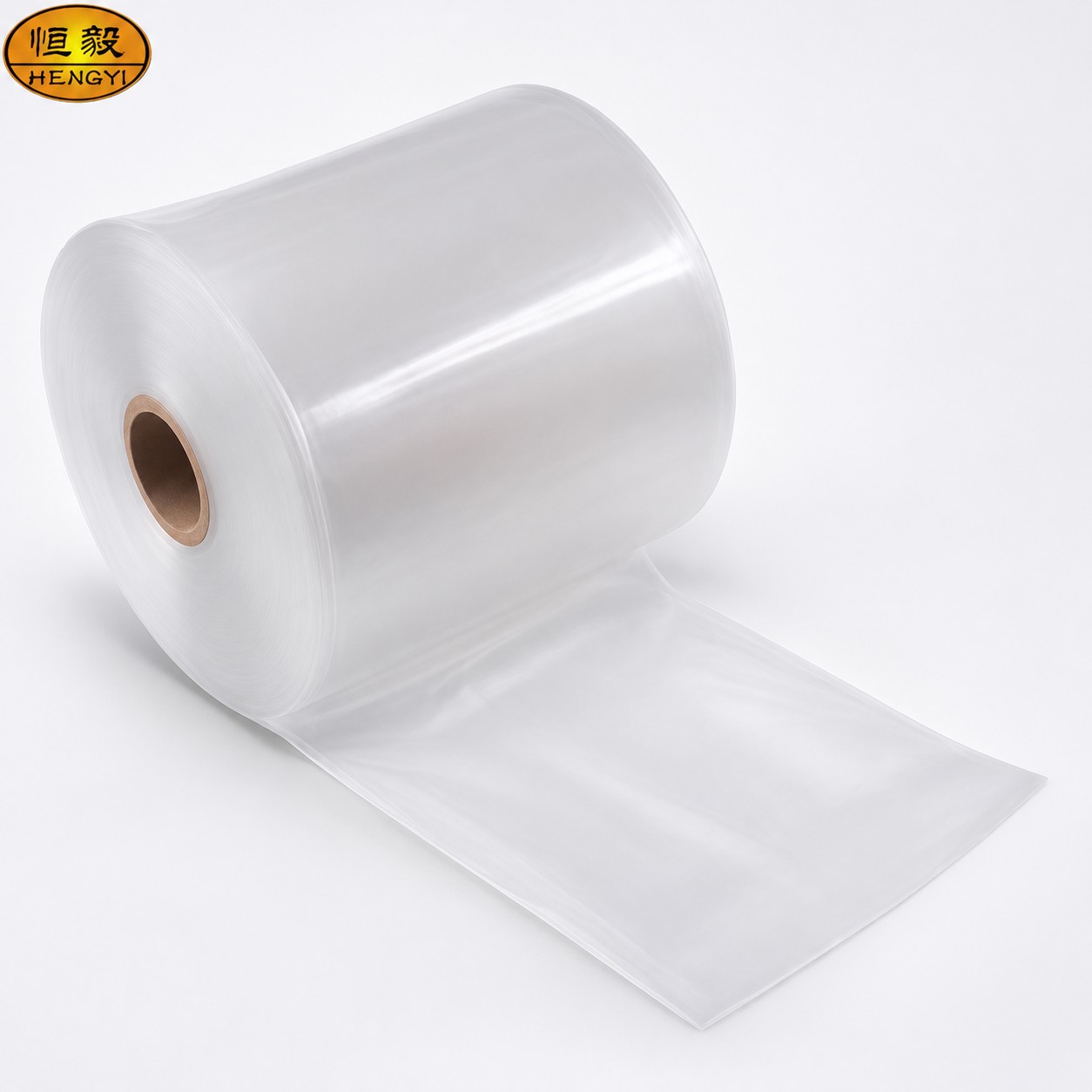
Retouched Hengyi product photograph showing a roll and unwound film. Appearance is illustrative; dimensions and resin grade are confirmed for your order.
Film format | Single sheet, layflat tubing or gusseted tubing; include a cross-section sketch. |
|---|---|
Width and units | State millimetres. For tubing, measure the flattened tube edge to edge; for sheet film, state the open sheet width. |
Single-wall gauge | Specify microns per wall and the agreed tolerance. 40 microns = 0.040 mm per wall; a two-wall stack is not the single-wall gauge. |
Roll and core | Net film kg or roll length; core inner diameter, core length and maximum roll outer diameter. |
Equipment fit | Machine make/model or unwind drawing, shaft size, permitted roll weight and feed direction. |
Material and finish | Requested resin, clarity or colour, printing and end use. Confirm the actual formulation by quotation and sample. |
Order quantity | Total kg per specification and required number of rolls. Confirm the current MOQ and quotation basis for that specification. |
If your request is for 40-micron tubing, write “40 microns per wall (0.040 mm)”. Away from gussets and folds, two flattened walls are approximately 80 microns together. This is a unit example, not a recommended gauge or a measurement of the photographed roll.
Confirm sheet width or layflat tube width on the drawing.
Compare core ID, roll OD and net film weight with the unwind limits.
Mark feed direction and, for printing, artwork orientation and repeat length.
Run a representative sample through feeding, sealing and cutting before approving the production specification.
Not directly. Layflat tubing has two connected walls; a sheet has one. A tube opened along one edge has approximately twice its layflat width before allowances. Specify the supplied format rather than converting widths without a drawing.
No. Compare the same resin, single-wall gauge, total quantity, printing and roll configuration. Core usage, converting and setup also affect an offer. Ask for a dated quotation with the sales unit and net film weight stated.
Copy into your enquiry | Format: ___; width and convention: ___ mm; single-wall thickness: ___ microns; resin/finish: ___; core ID/length: ___ mm; max roll OD: ___ mm; net film kg/roll or length: ___; unwind direction: ___; total kg per size: ___; artwork: ___; application and destination: ___. |
|---|
View the clear PE film and tubing product · Browse the film-roll range · Compare tubing and flat-film dimensions
Send your roll specification and machine drawing to Hengyi
Specification | HengYi production range / reference | What the buyer should confirm |
|---|---|---|
Film structure | Sheet, lay-flat tubing or custom converting | How the film will run on your machine or be used at the packing station |
Width | 7 cm to 2 m | Open width or lay-flat width; include gusset if applicable |
Single-side thickness | 0.008 mm to 0.20 mm | State mm or microns per wall, not an unclear combined value |
Roll weight | 5 kg to 100 kg per roll | Maximum lifting weight and machine unwind capacity |
Paper core | Customisable | Inner diameter, core wall thickness and preferred core length |
Our normal MOQ for a custom PE film roll is 300 kg per specification. Monthly production capacity is approximately 60 tons, subject to the current production schedule and the mix of specifications.
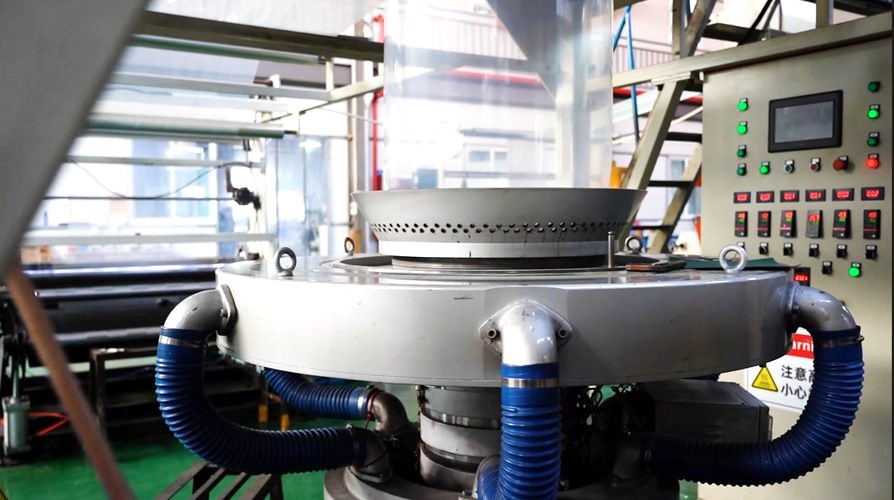
The extrusion settings are adjusted to the confirmed film structure, width and thickness.
For lay-flat tubing, one side of the tube is one film wall. A specification of 0.04 mm single-side thickness means 40 microns per wall. If the tubing is measured as a flattened two-wall stack, the reading is approximately 0.08 mm. Always state which method is being used.
Thickness should be selected together with width, packed weight, puncture risk and downstream sealing. A very wide tube or a film used around industrial components may require a different structure from a narrow liner for lightweight goods, even when both are called LDPE film.
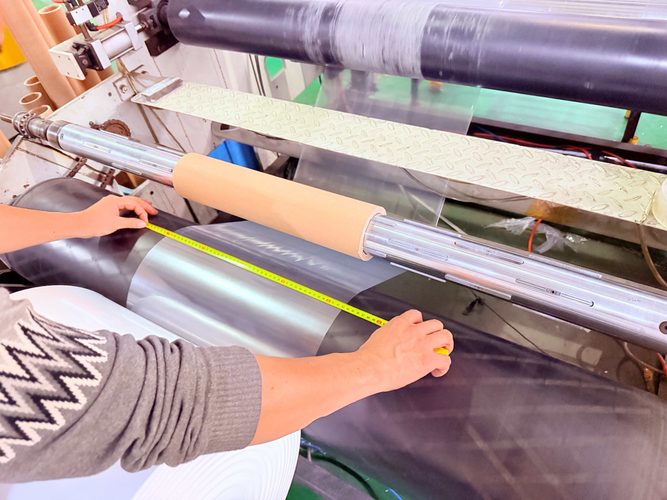
Width inspection confirms that the roll matches the buyer’s open-width or lay-flat-width requirement.
A heavier roll reduces changeovers, but it also increases handling weight and unwind inertia. A 5–20 kg roll may suit manual packing or frequent product changes. Larger rolls can suit continuous production when the unwind stand and lifting equipment are designed for them. We can produce rolls from 5 kg to 100 kg and customise the paper core to the buyer’s equipment.
Please provide the core inner diameter, required core length and any maximum outer diameter. A photo or drawing of the unwind shaft is useful when the machine specification is unclear.
LDPE and HDPE options are available. Film can be transparent or coloured to a Pantone reference. Semi-transparent, frosted and fully light-blocking appearances can also be specified. Anti-static, rust-prevention and degradable options are available for suitable applications; flame-retardant and conductive film are not offered.
Gravure printing is available up to 8 colours. Printed pricing excludes the plate charge, normally USD 100 per colour. Plates are stored free and can be reused for repeat orders when the dimensions, artwork and colour separation remain unchanged.
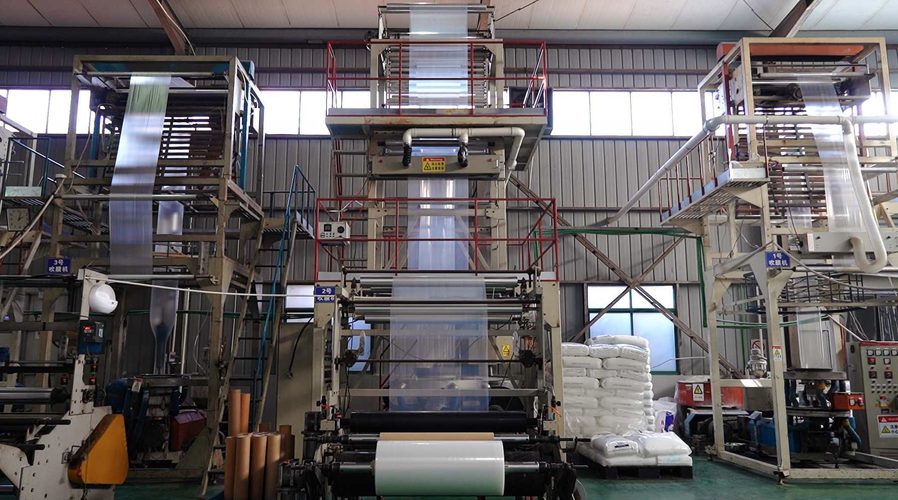
HengYi’s blown-film workshop produces custom PE film and tubing before printing or bag conversion.
Incoming resin is checked before production. During film blowing, operators monitor thickness and width. Our normal thickness tolerance target is ±3%. When film is converted into bags, dimensions are normally controlled to ±1 mm, followed by seal checks and outgoing sampling.
Finished film rolls are wrapped with bubble film for shipment. Export terms can be EXW, FOB or DDP, and payment is accepted by T/T, either in full or 30% deposit with the remaining 70% paid before shipment.
The machine-ready table above is your main specification checklist. Keep the film format, width convention, single-wall gauge, core ID, roll OD, net film kg and unwind direction together. A photo of the unwind shaft helps when a machine drawing is unavailable.
For roll quotations, state the total net film weight in kg and the roll configuration. Confirm core and packing weight separately rather than treating shipping gross weight as the saleable film weight. Review layflat tubing versus flat film if the supplied format is unclear.
Use the intended packing task to define the specification. These examples support product selection; the final material, dimensions and performance require the agreed drawing and sample review.
Confirm the flattened tube width, single-wall gauge, roll direction and sealing or cutting process. A tube has two walls when laid flat.
Specify the item cross-section, insertion clearance, cut length and which ends will remain open or be sealed.
Specify a single sheet or slit-open format, width, cut length and handling method. Do not quote tubing width as if it were a single flat sheet.
Define the item dimensions, coverage, joining method and storage conditions. Ordinary PE film should not be assumed to have stretch, shrink or barrier-laminate performance.
Supply artwork, repeat length, print direction and the intended converting process for gravure-printing review.
Identify the contents, contact conditions and destination documentation. Confirm the material and process for that project before making food-contact claims.
No. Specify the intended wrapping or converting process and required performance. Ordinary PE sheet or tubing is not interchangeable with every stretch, shrink or laminated structure.
Confirm maximum roll width and diameter, core size, unwind direction, single-wall gauge, roll weight and whether the machine takes tubing or a single web.
Only after checking their material format, core, roll dimensions and process settings. Use a trial roll when the specification or converting route changes.
View PE film roll and tubing | Compare tubing with flat film | Review converted flat bags
Send the completed specification table, machine or unwind photo, total kg per size and destination. Start with clear PE film and tubing; if you need finished pieces instead, compare converted flat bags. A trial roll can be discussed for the actual equipment and specification.
Send your packaging requirements
Prefer email? adam_packaging@163.com. A marked drawing or a photo with dimensions is a useful starting point.
