


Phone:
+86-13456733297


Views: 0 Author: Hengyi Packaging Publish Time: 2026-11-19 Origin: Hangzhou Hengyi Packaging Material Co., Ltd.


Choose a PE bag closure by how the package is filled, opened and used—not by the word “resealable” alone. A press-to-close strip, a sliding fastener and an adhesive flap require different checks. For a custom order, confirm the closure construction, usable opening and actual packing sequence before agreeing the specification.
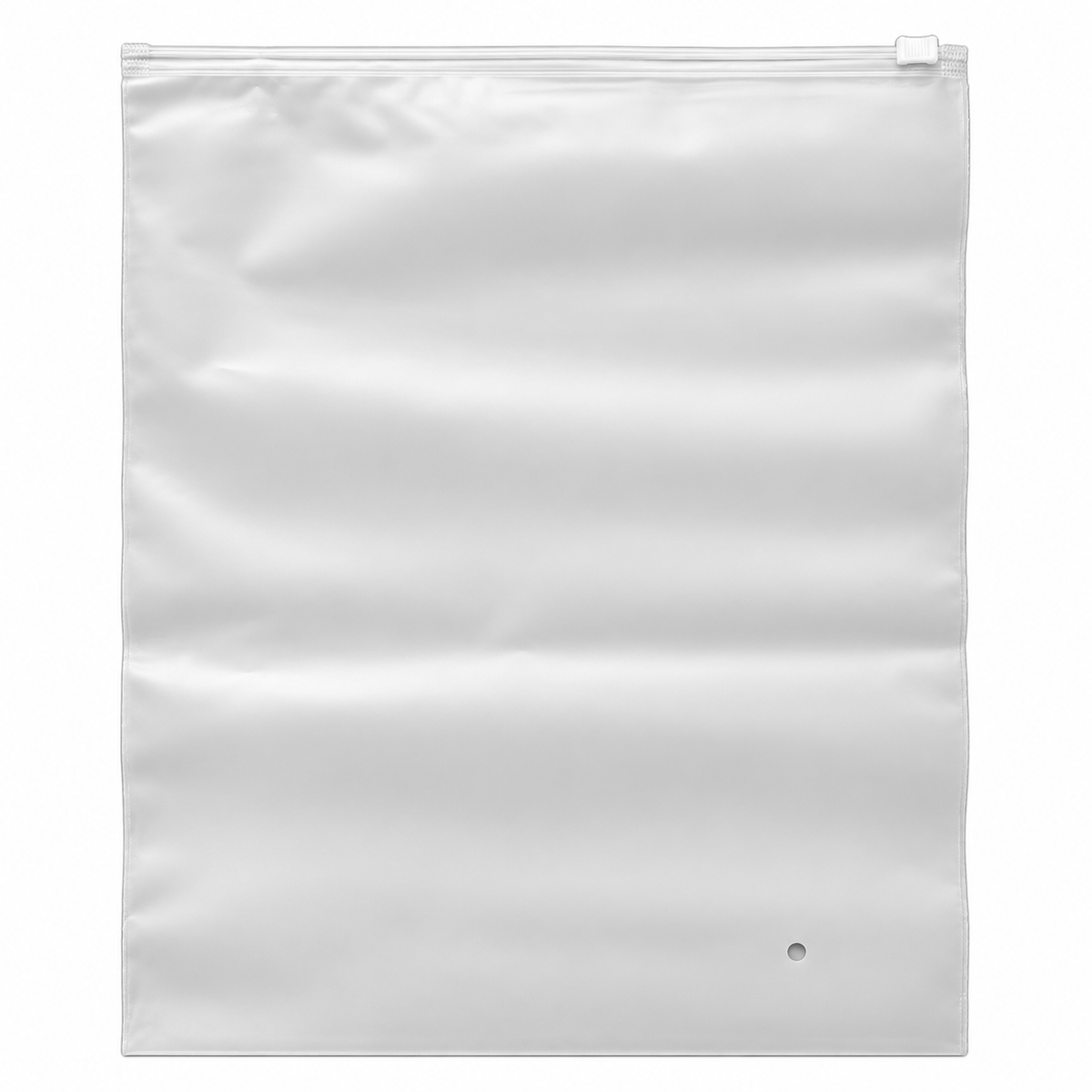
Photo-derived, retouched Hengyi slider-bag sample. The pictured hole and closure are part of this example; confirm your own bag construction separately.
Closure | What the buyer should establish | What to test with a sample |
|---|---|---|
Press-to-close / self-seal | The mating strips are pressed together by hand. State whether repeated opening is needed. | Alignment, complete engagement across the opening and opening feel with the intended contents. |
Slider zipper | A slider operates the closure. Include the slider and end stops in the approved construction. | Slider travel, opening clearance and closure operation after the bag is filled. |
Adhesive flap | A flap closes onto an adhesive area. Specify one-time sealing or repeated opening; do not assume the adhesive is repositionable. | Flap overlap, liner removal and adhesion on the actual bag surface under the intended handling conditions. |
For garments, identify the folded dimensions and how staff insert the item. For hardware sets, check whether the customer needs to remove parts and close the bag again. For cards and printed inserts, check that the flap reaches the intended sealing area without bending the contents. These are application examples, not a promise that one bag specification suits every product in that category.
A closure that looks convenient in an empty sample may become difficult to operate when the bag is tightly filled. Load the actual item and follow the normal packing sequence. If sharp edges contact the film, assess protection and handling separately; changing the closure alone will not resolve that contact.
Give the supplier a drawing showing where width and height are measured. For press-to-close and slider bags, identify the usable depth below the closure. For adhesive-flap bags, state the bag-body height and flap length separately. Include the thickness of the packed item, rather than relying on a flat outline.
For example, “30 × 30 cm” is incomplete if one supplier includes the flap or space above the closure and another does not. Ask for a marked drawing and check the sample with your item. Do not use a universal allowance without checking the actual construction.
For enquiries to Hangzhou Hengyi Packaging Material Co., Ltd., we recommend a single confirmation sheet covering bag style, material, finished dimensions, single-wall thickness, closure details and printing. It makes the differences between quotations easier to see and gives the sample review a clear purpose.
Describe the required opening experience rather than asking only for “a good zipper” or “strong glue.” If there is a reference sample, explain which features should match and which may change. Any agreed acceptance criteria should be recorded before production.
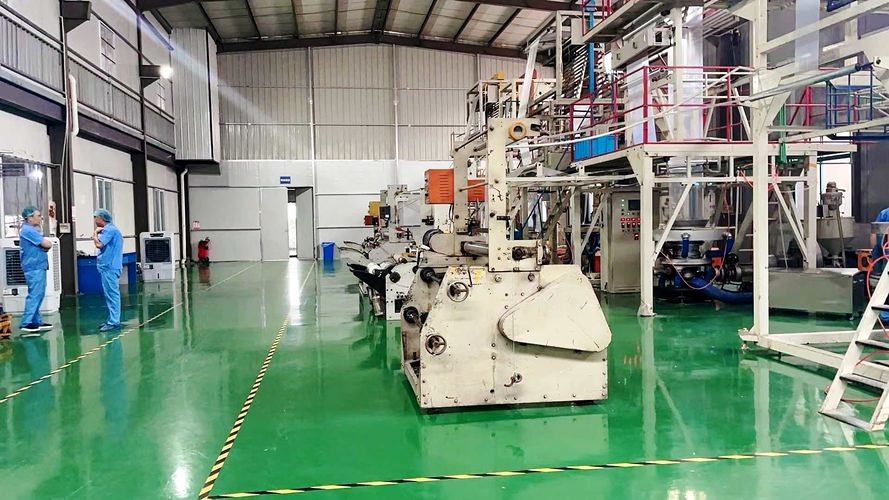
Hengyi production workshop, shown in an existing locally retouched factory photograph.
Product dimensions and a photograph or sample of the item to be packed.
Bag style and marked finished dimensions, including usable depth or flap length.
Material and single-wall thickness, or an existing bag for discussion.
One-time sealing or repeated opening, and the intended handling conditions.
Print artwork, order quantity, packing requirements and delivery destination.
No. The closure name does not establish a barrier, leak-resistance or airtightness rating. Holes, seals and the full construction matter. Agree any required performance and relevant verification separately.
That depends on the adhesive and construction. State the intended use and check the proposed sample; “adhesive flap” alone does not mean reusable.
Send a preferred closure or reference sample if available. If unsure, describe the packing process so the supplier can discuss options. Confirm the chosen specification before comparing final prices.
Next: prepare your sample approval checks, or send Hengyi your packaging requirements.
